

 Kiran C
 Kiran C
 Mar 24, 2026
Imagine yourself driving along the Athenian Riviera or along the Peloponnese's mountainous roads. Alternatively, you can be on the hunt for secluded beaches in Crete. Having your own car will give you complete flexibility and independence when travelling around Greece. You can avoid public transportation, dodge busy tourist routes, and discover Greece's true beauty at your own pace.
However, when purchasing a vehicle in Greece, it is important to know how things work here. Greece's used car market has a large selection of vehicles. You can find vehicles ranging from a small car suitable for driving around the tight streets of Thessaloniki to a large SUV that can handle island driving.
However, before you receive your vehicle, there are a few things you must complete, including following the purchasing process, going through the proper bureaucracy, and verifying the mechanical condition of your new vehicle and obtaining the documents that are needed for the Greek Ministry of Transport.
In this guide, you will find comprehensive knowledge about what is needed to buy a used car in Greece, including the necessary documentation to complete the vehicle purchase; a step-by-step road map to assist you through the used car purchasing process; safety tips you should be aware of; an extensive list of frequently asked questions that will assist you in making a decision about your used vehicle purchase; and more. So, grab a cup of coffee, and let’s begin discussing the ultimate buyer’s guide for purchasing a used vehicle in Greece.

Greece is experiencing a fantastic used car market right now and there are plenty of options to choose from! You can pick from an incredible selection of various models whether you need a vehicle for everyday use as a commuter or want an older vehicle for pleasure purposes. Hatchbacks and compact sport utility vehicles (SUVs) make up the majority of the used car market as they are easier to park in areas where there is heavy traffic, such as Athens. You can expect to find many different versions of the ever-popular Toyota Yaris, Volkswagen Polo, Peugeot 208, and Opel Corsa.
For those of you with more money to spend or whose family is needing a used car, you are going to find that SUVs such as the Nissan Qashqai and Toyota RAV4 are extremely popular along with luxury SUVs like BMW's X- Series & Range Rover's Evoque. The prices of used SUVs vary quite a bit based on the age and amount of miles on the used car (as well as condition).
For instance, a used SEAT Ibiza may sell for only a few thousand euros if the car is a 1998 model, but a used Audi A6 that has just come off lease could re-fetch at a significantly higher cost. Once you begin your search for the used car, you will quickly see that there are two major types of used car sellers: private owners and professional dealerships (mandres).
Since you are buying from a private owner, you will usually get a better price; however, you will be solely responsible for the transfer of title (paperwork). On the flip side, by purchasing from a professional dealership, you will generally pay a little more; however, they will do all of the paperwork (bureaucratic heavy lifting) for you and you might be able to get a short-term warranty.
If there is one thing you must know when buying a car in Greece it is that "documents rule." In Greece, the state requires specific forms of documentation in order to accomplish a successful vehicle registration transfer. If the transferring vendor fails to provide even one document the Citizens' Office will delay the final transaction.
The following is what you must provide in order to buy and register a vehicle in Greece.
To purchase any vehicle in Greece, you must have proper legal identification and subsequently, you must demonstrate that you are legally registered as an affiliated taxpayer with the Hellenic Republic.
Tax Registration Number (AFM): You must have an AFM (Arithmos Forologikou Mitroou) in order to purchase a vehicle in Greece. All expatriates must apply for one at the DOY in your area before starting your vehicle search.
Proof of Identity: Valid Passport or Greek ID card.
Residence Permit: Non-EU citizens need to possess valid Greek residence permits in order to register the car.
TAXISnet Access: You must have login credentials to create a valid e-Paravolo to complete the transfer electronically via the TAXISnet system.
Prior to completing the purchase, ensure that the seller provides you with the original copies of the following 4 vehicle transfer documents. DO NOT accept photocopies for completion of the transfer.
Vehicle Registration Document (Adeia Kykloforias): This document serves as official documentation for your ownership.
Current KTEO Certificate: This document is the official verification by the Greek Government that the vehicle meets standards set forth in Greece's National Transportation Act making the vehicle roadworthy.
Road Tax Receipt(Teli Kykloforias): In order for the title to be transferred to your name, the seller must prove that he has paid road taxes on the vehicle in the current tax year.
Certificate of Non-Indebtedness: In order for the title of the vehicle to be transferred to your name, the seller must provide documentation from the Greek Tax Office confirming that they do not have any current outstanding road taxes on the vehicle.

Prior to searching for listings, determine what kind of driving you will be doing. A small hatchback is likely to be more suitable for someone residing in central Athens than an all-wheel-drive vehicle (i.e. Suzuki Vitara) designed to traverse the rugged mountainous terrain of Epirus.
Secondly, set a realistic budget. Remember to include any costs that may arise from the transfer of ownership, immediate maintenance, insurance, and annual road taxes (the amount can be calculated on engine size and year of manufacture).
Search for your new vehicle through online resources or by stopping into local dealer showrooms. As you search the inventory provided by online listings, study carefully the listed mileage, year of first registration, and photos. Make sure you find a vehicle that has a clean history and includes a full description of all aspects of the car. When doing your search online, narrow your search by city to find an automobile located near you, such as in Heraklion, Patra, or Volos.
Once you have selected a vehicle you would like to proceed with inspect, you will want to make contact with the owner. Initially, ask some preliminary questions, including how long they have owned the vehicle, the reason for selling it, if they have a complete service book.
You should schedule an inspection of the vehicle during daylight hours.Inspecting the exterior of the vehicle involves walking around the car and checking for any mismatched colors or uneven gaps between body panels, which could indicate that the car has been previously involved in an accident.
While inspecting the tires, you would also want to check for inconspicuous irregular wear, that would indicate the car has either been in an accident and/or if its odometer reads incorrectly. Additionally, when inspecting the inside of the vehicle, ensure there is no wear on the seats that is not consistent with the odometer reading.
You should never purchase a pre-owned vehicle in Greece unless you have had it inspected by a mechanic before purchasing it. You will need to either take your mechanic with you to the inspection or have the seller take the car to an independent garage that you select. The mechanic will utilize a diagnostic system to assess the electronic devices and engine of the vehicle.
Additionally, he will conduct a thorough check for rust or frame damage by raising the vehicle onto a lift. Although the mechanic's fee will be between 30 and 50 euros, it could save you hundreds if not thousands of euros.
You need to get behind the steering wheel and drive it on both city streets and on a major highway. Make sure the vehicle goes over bumps smoothly and has no unusual clunking noise when going over a bump. Additionally, check the transmission to ensure it shifts smoothly, and test the brakes. You will also want to test all of the electrical systems and air conditioning unit, given that summer temperatures in Greece can be quite high.
Negotiating is common in Greek culture. Once your mechanic says ‘yes’, negotiate your price based on any minor issues of concern (examples: worn tires, pending maintenance schedule). Be polite yet assertive in your negotiating. Once a price is established, clarify who is responsible for the transfer fees (the buyer typically pays these; however, this is negotiable).
The simplest means of transferring ownership of a vehicle in Greece will be completed through the KEP (Citizen Service Center). The seller must attend in person at the KEP when transferring a vehicle.
Initially, you will create and pay for an e-Paravolo (the electronic government fee) through the TAXISnet fee system (this fee varies based on engine size). You will need to take the printed e-Paravolo with all documents listed under the documentation provide to the KEP. The clerk will process your documents and keep the seller's previous registration and issue the buyer a temporary registration paper. The buyer will receive the official new Adeia Kykloforias (vehicle registration) by either mail or by picking it up at KEP approximately two weeks later.
The seller's insurance will cease upon signing the title, meaning there is no crossover of the seller's insurance to your new vehicle. You will require your own active insurance policies before driving the vehicle away. You will need to have at least liability coverage as required by law to insure that the vehicle is legal to drive. However, if you prefer additional insurance coverages you may also want to consider fire/theft and/or comprehensive (Mikti) insurance to cover the newly purchased vehicle.

The used car market has some great buys; however, it also has a lot of ways for an unsuspecting buyer to experience fraudulent transactions. Protecting your investment requires a strong dose of awareness and concern. Below are the top 10 things to be aware of when purchasing a used car in Greece.
Odometer rollback is a common problem for the used car market around the world. Greece is no exception to this problem. A vehicle may display 80,000 kilometers on the dashboard, but in reality, it could have 200,000 kilometers. To protect yourself from this problem, you should always ask to see the official KTEO record. The KTEO document indicates the mileage of the vehicle every time it was inspected (every two years). If the numbers do not match, you should walk away.
Most used vehicles sold in Greece have been imported from countries such as Germany, Italy and Bulgaria. Although many of these vehicles are well-equipped, they also have unique risks. One of the main risks associated with vehicles bought from Northern Europe is rust on the undercarriage due to road de-icing products being used. You should ask your mechanic to thoroughly check for severe undercarriage rust. It is also considerably more difficult to verify the mileage and accident history of an imported vehicle compared to a domestic vehicle.
Before finalising the purchase of the vehicle, you need to ensure the seller has the right to sell the vehicle. Some vehicles have a "Parakratisi Kyriotitas" (Retention of Title). This means that the vehicle was purchased using a bank loan that has not yet been paid off in full. If you see this stamp on the green registration booklet, the seller must provide you with an official document from the bank that shows the loan has been paid off before the KEP will process the sale.
You should be aware of the location where the vehicle has been driven. Even though a vehicle that has only been driven on a small Greek island may have a low odometer reading, the vehicle has experienced thousands of short, stop-and-go trips resulting from the limited number of roads on the island, which will increase the wear and tear on the engine compared to a vehicle that has been driven on a highway.
In addition, vehicles that have been parked by the sea for long periods of time will have been exposed to the corrosive effects of salt air. On the other hand, vehicles from urban centres such as Athens may have many parking dents and excessive wear on the clutch due to stop-and-go driving in heavy traffic.
If a deal sounds too good to be true, it is. Frequently, scams are attempted by presenting luxury vehicles at unbelievably low prices and stating the seller needs to move the vehicle quickly because they are in another country. The scammer will ask you to wire money as a deposit to "hold" the vehicle. Never send any money before you see the car, verify the paperwork or hold the keys.

Once you buy a car, the next biggest step to take in ensuring both your and subsequent owner's safety is to keep the condition of your vehicle at its highest level possible. The scorching summer months of Greece can do tremendous damage to car batteries, cooling systems, as well as the exterior paintwork of your vehicle. One of the most significant actions you can take to ensure the longevity of your vehicle is to have your A/C unit serviced at the start of every summer, along with checking your car water level frequently.
Another important factor to consider when maintaining the condition of your vehicle is to consistently check your tires for wear. Because Greece experiences extreme temperatures, tires will wear down considerably faster due to the heat and sunlight reflecting off of the asphalt roads. You should routinely check your tire tread depth if you plan on going on longer road trips.
Making sure that you have a trustworthy mechanico (synergeio) is one of the most effective means of maintaining the condition of your vehicle, therefore, rely on recommendations from people you know (friends or people in the community) when searching for a trustworthy mechanic.
Finally, all of your car's documentation, which includes: driver's registration, vehicle insurance records, valid KTEO (periodic technical inspection) certificate, and the Teli Kyklonismou (traffic registration) receipt, should be kept organized inside of a file folder inside of your vehicle's glove compartment to ensure the documents are available to the police.
The police enforce random check points throughout Greece and you could be fined or have your licence plates confiscated by police if you do not have these documents available at the time of being stopped.
Purchasing a used vehicle in Greece can be time-consuming, and therefore requires some degree of patience, as well as diligence and an understanding of the bureaucracy. By developing an appropriate budget prior to the purchase; thoroughly researching vehicle models and performing a professional mechanical inspection of the vehicle; you set yourself up for a smooth and simple purchasing experience.
Don't let the amount of paperwork overwhelm you. The KEP system is easy and fast when you have collected your documents ahead of time. Make sure you check the vehicle's history; watch for common scams; and obtain insurance coverage before you start operating the vehicle.
You are now ready to openly compete in the Greek used car marketplace like a seasoned local; enjoy the search, negotiate like a professional, and prepare for the beautiful views that Greece offers from the vehicle you are purchasing. Safe travels!
You will need an AFM if you are purchasing a vehicle in Greece. An AFM is required to transfer a vehicle title, pay road tax, or insure a vehicle in Greece. If you are an Expat, you must get your AFM at the local tax office before you purchase a vehicle in Greece.
The title transfer fee (e-Paravolo) varies depending on the vehicle's engine size (cc). For example, a car in the 1400cc - 1600cc range should cost 135euros -165euros to have it's title changed. The fee will cost more if the engine is larger than that. The buyer of the vehicle typically pays this fee. However, you can negotiate the amount of the fee.
KTEO (Kentriko Tameio Eleghou Statheron or Central Body for Static Control) is Greek for mandatory periodic inspection of your vehicle’s roadworthiness in Greece. New vehicles are required to undergo their first KTEO inspection 4 years after registration followed by an inspection every 2 years thereafter. If you drive a car without a valid KTEO, punitive fines will be levied against you.
Yes. Every car owner must pay an annual road tax (Teli Kykloforias). The tax amount due is based on the vehicle engine size (cc), year registered, etc. Payment for the road tax occurs in November or December for the upcoming year.
Generally Expats that have purchased a vehicle in Greece are those that possess a valid residence permit, have an AFM and a Greek residence address. Tourists with standard 90-day Schengen visas generally cannot purchase/register a vehicle in Greece.
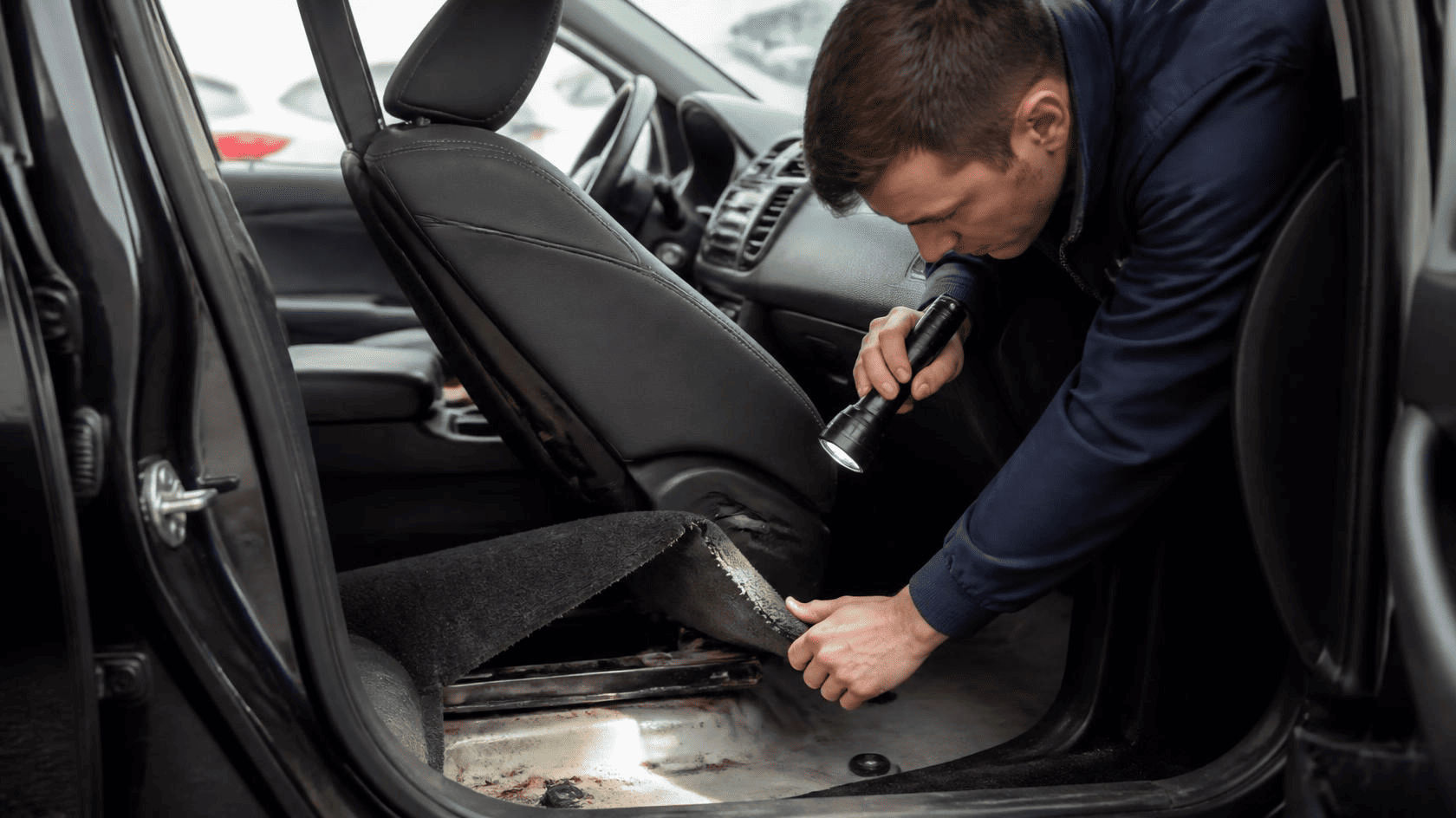 How to Spot a Flood-Damaged Used Car Before You Buy
Sep 16, 2026
How to Spot a Flood-Damaged Used Car Before You Buy
Sep 16, 2026
 2017 Ford GT for Sale in Tirana for EUR 80000 – A Rare Opportunity to Own an Automotive Icon
Jul 10, 2026
2017 Ford GT for Sale in Tirana for EUR 80000 – A Rare Opportunity to Own an Automotive Icon
Jul 10, 2026


 Google
 Facebook