

 Kiran C
 Kiran C
 Apr 03, 2026
In this article, we'll cover everything you need to know as a Polish buyer: documentation, registration, safety inspections, and the best car buying platforms – all in one easy location.
Statistics show there are many Polish buyers that get burned by purchasing used vehicles. Every year, countless buyers in Warsaw, Kraków, Gdańsk, or anywhere else in Poland find themselves discovering liens, odometer roll-back fraud, or missing paperwork after they have already completed the sale.
This guide was created specifically for purchasers in Poland. If you're searching for your vehicle on websites such as CarAgencia (caragencia.eu) or visiting your local car dealerships in your voivodeship, following the steps included will save you time, money, or a headache. We will walk you through the entire process from the time you begin to search for your vehicle online, until you drive off with the car you bought legally registered and insured.
CarAgencia (caragencia.eu/cars-for-sale/Poland) is one of the largest digital marketplaces for buying or selling a vehicle in Poland. They provide a platform connecting private owners with dealerships in Warsaw, Kraków, Gdańsk, and many other locations.

The Polish used car market remains one of the most active in Central Europe. The following provides a brief overview of the current state of the Polish used car sector as of 2025:
More than 272,000 used vehicles for sale at the beginning of 2025.
Median advertised price = 32,900 PLN (additional ranges vary by region relative to the vehicle's price).
Average age of used vehicles = 12.1 years with approximately 180,000 km on the odometer.
Most popular used car manufacturers = Skoda, Volkswagen, Toyota, Opel, and Ford.
The highest-priced area in Poland = Mazowieckie voivodeship (Warszaw's metropolitan area) median = 39,975 PLN.
The lowest-priced area in Poland = Lubusz voivodeship (a median = 26,300 PLN).
The most popular vehicles listed on CarAgencia's website currently include: Skoda Octavia, VW Passat, Toyota Yaris, and Toyota Corolla, the latter of which topped the list of total new car sales in Poland; therefore, providing a reference for vehicle reliability with Poland's buyers.
Pro Tip: Price-checking throughout various areas. For example, the same "2017 Skoda Octavia Model" may have a listed price in Lublinka that is 5,000 PLN lower than it is in Mazowieckie.
Step-by-Step: How to Buy a Used Car in Poland the Right Way
You will need to begin on a reliable online marketplace. As an excellent resource, CarAgencia (caragencia.eu/cars-for-sale/Poland) provides car listings in all of the major cities in Poland — Warsaw, Kraków, Gdańsk, Wrocław — as well as a multitude of smaller cities across the country. The website gives you the ability to narrow down your search by vehicle manufacturer, model, price range, and city.
When performing your search for low-maintenance vehicles that are less likely to incur high repair costs, you should filter your results to only vehicles that have less than 150,000 km on the odometer.
Always give preference to the vehicles with photographs of the actual vehicle(s) being sold and the seller should provide an up-to-date vehicle history report.
If you are a first-time buyer in Poland, it is a good idea to buy from a registered dealership as opposed to an anonymous private seller, as this will increase your feeling of security.
Before you contact the owner, verify the vehicle has not been stolen. There are three major sources for this information in Poland:
AutoDNA: One of Poland's largest auto history providers.
CEPIK: Poland's official auto registration database.
KRZ: National Debtors Registry; a new database established in July 2021 that identifies cars with outstanding liabilities.
The full history report will assist in checking for prior title transfers, accidents, maintenance, prior inspection mileage, etc. Completing just this step will significantly decrease your chances of being victimized by used car fraud in Poland.
The third step in purchasing a car is to conduct a physical inspection of the vehicle prior to purchasing it. If you do not have any mechanical experience, you can hire an independent mechanic to do a pre-ownership inspection on the vehicle for you.
Some of the items that you should check during your physical inspection of the vehicle are:
Inspect for rust on the bottom of the vehicle and the wheel arches and door sills (Polish winters create issues for bodywork).
Ensure all panels on the vehicle have the same paint color – if a panel has been repainted, this could indicate past accident damage.
Check that there are no warning lights illuminated on your dashboard when you start your vehicle.
Inspect the tread depths and condition of all four tires.
Test the A/C, heating system, all of the windows, the central locking mechanism, and all of the exterior lights of the vehicle.
Obtain the car's przegląd techniczny (technical inspection certificate) and confirm the expiration date
There is still a large number of used car Odometer fraud cases in Poland. Verify the vehicle's odometer reading with the Vehicle Service Book and the CEPIK (Central Registry of Cars and Drivers - CEPIK).
You can expect to negotiate with Polish sellers, especially when dealing with private sellers. The following stats will give you an idea of what to expect when you negotiate:
Starting your offer at approximately 7,000 PLN (Polish Zloty) less than the listed asking price is fairly typical
Typical closing prices for the majority of automotive transactions tend to be approximately 3,500 PLN (Polish Zloty) less than the listed asking price
Use any of the mechanical flaws, excess mileage, or need for service as leverage to negotiate
Be courteous and maintain your position. A professional, well-prepared offer will be treated with due respect from the seller.
The contract becomes legally binding when signed by both buyer and seller. The following information must be provided on the Umowa Kupna-Sprzedaży:
The legal names, complete addresses, and personal identification numbers of both parties.
The full description of the vehicle should include make, model, VIN (number), year, and mileage.
The agreed purchase price in PLN
The date of the sale
The signatures of both parties
Provided there is a written bipartite agreement between the parties, a buyer and seller do not require the services of a notary in connection with the private sale of a used car in Poland.
It is important that the name of the seller on the Umowa Kupna-Sprzedaży matches the name on the registration certificate (dowód rejestracyjny). Any difference between the names will cause a delay in registering the vehicle.
The buyer is required to submit the PCC-3 tax declaration to the appropriate tax office (Urząd Skarbowy) within 14 days of signing the Umowa Kupna-Sprzedaży and to pay a percentage of the purchase price to the tax office (2.00% of the value declared on the PCC-3). The PCC-3 tax applies to the private sale of used vehicles in Poland. If purchasing a used vehicle from a VAT-registered dealer however, the buyer is not required to file the PCC-3 and will pay the VAT to the dealer.
Use the actual sales price of the vehicle on the PCC-3, not a low number.
The tax office will review the sales price you have declared with that of similar vehicles and may adjust your PCC-3 declaration accordingly.
Failure to file the PCC-3 within the 14-day period may result in penalties
Before you can register your vehicle, you must obtain third-party liability vehicle insurance (ubezpieczenie OC). If the previous owner had OC insurance on the vehicle, it automatically transfers to you; however, you can cancel it. You should shop several insurance companies in Poland for your OC and compare their policies. Some of the larger insurance providers in Poland are Polisa, LINK4, PZU, Warta, and Generali.
Third-party liability vehicle insurance (ubezpieczenie OC) is mandatory and you could be fined under the Insurance Guarantee Fund (UBF) for driving a vehicle without OC.
You may purchase comprehensive vehicle insurance (ubezpieczenie autokasko) in addition to your OC, but this type of insurance is optional and recommended only on newer and/or more expensive vehicles.
Registration of your vehicle is mandatory and must be done within a specific time frame. To register your vehicle, take your documents to the Wydział Komunikacji (Department of Communications) at your local starostwie powiatowym (district office) or city hall.
The buyer has 30 days from the date of purchase to register the vehicle. Failure to register the vehicle within 30 days is subject to a fine ranging from 200 PLN to 3,000 PLN.
Here is a complete list of all the documents you need to complete a legal used vehicle purchase and registration in Poland. Keep copies of all of them.
Provide originals AND copies of every document you are giving to the registration office. The clerk will retain some original documents (for instance, your old registration certificate) and return all other originals to you.

Knowing the costs of registration beforehand prevents unexpected costs at the district office. Here are the actual costs you'll incur:
In Poland, the standard registration fee of a vehicle is 180.50 zloty (PLN). If you are keeping the plates from your region and if these plates have already been issued to that vehicle, the registration fee will be reduced to 81 zloty. When budgeting for vehicle tax (PCC-3), the PCC-3 is 2% of the vehicle's value. For example, if you purchase a vehicle for 30,000 zloty, you will owe the tax office 600 zloty in tax.

Electrical, mechanical, and structural issues are present in Poland's car market, particularly with private sales on unknown platforms. Here are a few of the dead giveaways to avoid.
The seller will not give your any part of the Vehicle Identification Number (VIN), or the seller will not allow you to see part of the chassis number; therefore, the seller is attempting to conceal relevant information regarding the vehicle.
The seller's name on the vehicle registration certificate does not match the seller's identification (ID).
The asking price for the vehicle is exceptionally low, meaning you should bring your common sense into play and put your belief(s)/conscience back in place before making your purchase in Poland.
The vehicle has a large quantity of new paint (this is called a "refresh") applied to numerous panels of the vehicle, which the seller has not disclosed, indicating deceitful behavior.
The vehicle does not have a service history booklet (Książka Serwisowa), nor does the seller have any verifiable record of previous services.
The seller will only permit a cash payment for this transaction; and the seller refuses to provide a signed contract regarding this transaction.
The seller's Technical Inspection has expired and/or is due for inspection within one month of today.
The vehicle is registered in an area that is substantially distant from the seller's place of business; this could mean the possibility of a 'reseller chain'.
When purchasing a vehicle in Poland, many buyers overlook the importance of the Clean Transport Zones.
The Polish cities of Krakow and Warsaw are implementing Clean Transport Zones (SCT) to limit access to high-pollution vehicles.
By 2028, diesel-powered vehicles will need to be at least a Euro 6 emission rating and petrol-powered vehicles will need to be at least a Euro 4 emission rating before they can enter the SCT.
By 2030, the minimum emissions rating for diesel vehicles will increase to Euro 6 and for petrol vehicles to Euro 5.
All vehicles must contain proof of their emission class on their Polish registration certificate if they intend on entering these zones as required.
If you're purchasing a used diesel engine from either Warsaw or Kraków, you need to make sure the engine(s) are of Euro emissions class standard. An inexpensive older diesel could potentially make your vehicle unusable in the central areas of either city within just a few years!
CarAgencia (caragencia.eu) is a digital based car marketplace that only services buyers in Eastern Europe. To safely use CarAgencia, you should implement the following strategies:
Request as many images as possible, up to 25 images can be placed on a listing.
Look for listings that also have a video of a walk-through of the car.
Use the messaging function on the CarAgencia platform to create a record of all communication with the seller.
If making a large purchase, deal with a dealer as opposed to a private seller to eliminate the risk to your ability to get into the SCT.
Do not wire or transfer money until you have seen the vehicle in person.

Every vehicle on Polish roads must complete routine technical inspections at an authorized Stacja Kontroli Pojazdów (SKP) to be in compliance with the country’s safety requirements. What is important to a purchaser when buying a vehicle?
All registered cars must have a valid przegląd techniczny sticker affixed to them.
Most standard vehicles need to undergo inspections every two years while older vehicles or commercial vehicles may require an inspection on a yearly basis.
Ask the seller for the stamped karta pojazdu (vehicle card) showing the dates of all the past inspections for this vehicle.
If the current inspection is set to expire in the next 3-6 months, take this into consideration when negotiating with the seller regarding the purchase price by factoring in the cost of renewal.
The cost of an inspection is dependent on the voivodeship; however, the cost for typical passenger vehicles is between 98 PL and 160 PLN.
If you are purchasing an imported vehicle either from another country or from another EU member state, it must get a Polish technical inspection before you will be able to register it here, even if it presently holds a valid inspection from the EU country it came from.
If you choose not to pay in cash for your vehicle (gotówka) there are several different methods of financing the purchase of your vehicle in Poland. The primary options include:
Bank credit (kredyt samochodowy) which most larger Polish banks offer; including PKO BP, BDK Santander, mBank, ING.
Leasing is much more common with businesses than with private individuals; however leasing is becoming more widely available through consumer leases to individuals.
Dealer financing occurs through the dealer and can be a very convenient option; however, be sure to carefully compare rates since dealers typically earn a commission fee as part of the financing of the vehicle.
Always compare Rzeczywista Roczna Stopa Oprocentowania (RRSO) for various offers, do not only consider the monthly payment amounts
Foreign purchasers or expats without credit history in Poland will likely be subject to a greater level of scrutiny during the application process and often will be required to pay a higher interest rate than other purchasers. Having a PESEL number will greatly simplify the process of purchasing a vehicle; however, you do not have to have a PESEL in order to purchase a vehicle.
You have a period of 30 days from the purchase date to register the vehicle at the Wydział Komunikacji (the traffic department) in your local area. If you do not register within this period, you will incur a fine ranging from 200 PLN to 3,000 PLN. Business owners selling cars have an additional 90-day period; however, make sure to allow plenty of time (at least until day 29) because you may have to wait for an available appointment to register your vehicle at the registration office.
No; but keep in mind when purchasing a used vehicle from a private seller that a private sale agreement (umowa kupna-sprzedaży), which contains the signatures of both parties, is sufficient to create a binding contract for the purposes of the Polish legal system. An acceptable private sale agreement must contain the VIN, details of the vehicle, the purchase price, the identification numbers of each party, and the date. It is very important that you keep your original, signed copy of the agreement, as you will need this document to register your vehicle.
Yes, it is possible to purchase a vehicle without a PESEL; however, the complexities associated with the registration process become significantly more significant if you do not possess a valid PESEL number. EU citizens will generally be able to register a vehicle using a valid passport and proof of residence within the EU. Non-EU citizens will be required to provide various documentation to register a vehicle in Poland. If you are planning to reside in Poland for an extended period of time, it would be in your best interest to secure a PESEL number as quickly as possible, as this will help to eliminate time-consuming delays at the registration office.
When purchasing a used vehicle from a private vendor, the PCC-3 (also known as podatek od czynności cywilnoprawnych) is the civil transaction tax that will be levied at a rate of 2% of the declared vehicle value. You must file the PCC-3 declaration form and remit such tax payments to your Urząd Skarbowy (tax office) no later than fourteen (14) days after you have executed your vehicle purchase agreement. The PCC-3 does not apply when you purchase from a registered auto dealer; you instead would be obligated to pay value-added tax (VAT).
Yes, using precautions means that you can buy a car from a private seller or a dealer with the help of a website like CarAgencia (caragencia.eu/cars-for-sale/Poland). Before making any type of payment, make sure you see the car in person first, run the vehicle through AutoDNA or CEPIK for a vehicle check, and confirm that the seller's identification matches the name shown in the registration documents before making the transfer of funds. Never transfer any money before signing your umowa kupna-sprzedaży and completing the inspection on the car.
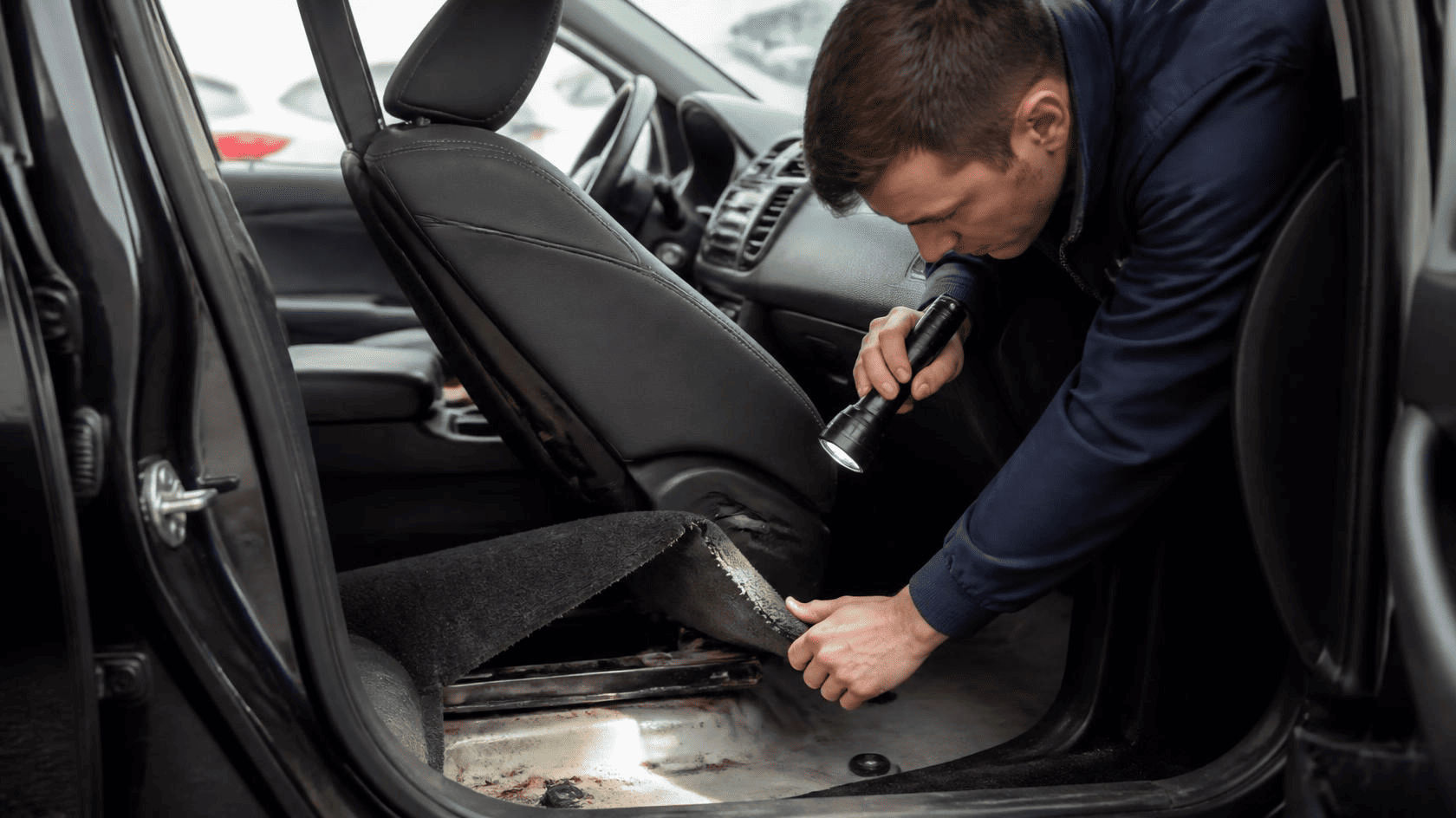 How to Spot a Flood-Damaged Used Car Before You Buy
Sep 16, 2026
How to Spot a Flood-Damaged Used Car Before You Buy
Sep 16, 2026
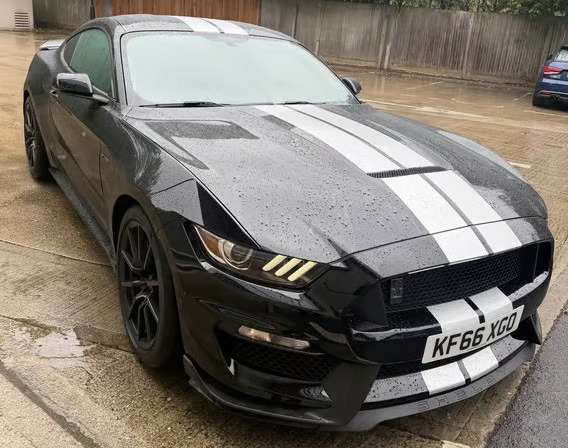 2017 Ford GT for Sale in Tirana for EUR 80000 – A Rare Opportunity to Own an Automotive Icon
Jul 10, 2026
2017 Ford GT for Sale in Tirana for EUR 80000 – A Rare Opportunity to Own an Automotive Icon
Jul 10, 2026


 Google
 Facebook