

 Kiran C
 Kiran C
 Mar 24, 2026
Searching for a vehicle in central Europe? Look no further! The Czech Republic has a flourishing and diverse used auto marketplace. Anywhere between Prague’s city streets and the beautiful roads of Moravia, owning an automobile enables many opportunities.
Whether you are an expat starting a new life or a resident looking to purchase a more dependable vehicle for your daily commute, the overall process of purchasing a used vehicle can feel like trying to navigate an overly-complicated maze. These complexities include variable pricing, convoluted paperwork, verifying you are not acquiring an automobile with defects/issues not revealed at the time of purchase.
This all-in-one companion guide will provide you with all the resources necessary to understand the used automobile marketplace within the Czech Republic. Additionally, this guide will clearly outline the required steps associated with the used automobile marketplace, mandatory paperwork required for purchasing, and safety precautions you should take prior to making a purchase.
Once you’ve reviewed this entire guide you will possess all the knowledge and information necessary to make an intelligent, safe, and confident purchase.

The automotive industry in the Czech Republic has an extensive history. With the country home to the original manufacturer of Skoda automobiles, it is easy to see why Skodas are such a common sight on Czech roadways. As large dealers of premium used domestic and foreign manufactured automobiles, e.g., BMW, Mercedes Benz, and Audi, the Czech automotive industry receives a substantial supply of premium used cars from Germany each day.
There are many advantages to owning a used automobile within the Czech Republic. The majority of a new vehicle’s depreciation occurs from the moment that it leaves the dealership’s property.When you buy a used car, you can avoid the large loss of value that occurs with each new car sold.
This means that you will get much more vehicle for your dollar, you will have lower insurance payments than someone who buys a new car, and there are many different types of vehicles for sale to choose from. There is also the risk of purchasing a vehicle that has been tampered with to reduce the value on the odometer (odometer rollback) or that there are undisclosed accidents (previously damaged vehicles) from the past on the vehicle you purchase.
Those are some of the possible risks associated with purchasing a second hand vehicle. Because of this, it is crucial to thoroughly research the local purchasing procedures that will allow you to buy with the utmost peace of mind.
The following is a step by step process you should follow when purchasing a second hand vehicle in the Czech Republic to avoid having problems with money, legal issues or having issues regarding your purchased vehicle being defective.
In addition to purchase price, you will have to factor in the cost of required vehicle insurance, vehicle registration fees and mechanical service performed (i.e. oil change, timing belt change, etc.) after you buy the car. Make a determination of the type of vehicle that you need based on your budget and your lifestyle.
For example, if you will be driving in a crowded city like Prague where parking spaces are very tight, then a small hatchback would be more appropriate than a larger vehicle like a Skoda Octavia Combi (station wagon) that you would use to take your family to the Krkonoš mountains.
You can start your search by using the internet and reputable automobile websites, and/or visit local vehicle dealerships (autobazary). Be sure to spend the necessary time comparing prices between similar vehicles for the same make, model and year sold at different locations in different areas of the country at different prices.
You can determine how much the resale value of a vehicle will be based on its age by looking at the price of the same type of vehicle sold in different parts of the country.The cost of vehicle purchases may differ between Ostrava and Brno compared to Prague, despite similarities between the vehicles.
Find out from the seller about the vehicle's past — has it ever been brought into the country or was it purchased originally from within the Czech Republic? How many former owners have there been? Whether or not there is a full documented history of services performed/completed?
It should not be possible to purchase a vehicle without examining it personally. Instead of purchasing the vehicle based on visual inspection only, inspect the vehicle during daylight hours; check for signs of re-painting, mismatched body part alignment, and any signs of rust/corrosion. Verify all tires show equal traces of wear normally associated with improper tire alignment. Perform a complete vehicle test drive; pay attention to any unusual noises, braking functionality, and smooth transmission operation during the test drive.
If you are not experienced with vehicles, take an automotive technician with you to perform an inspection. Many buyers within the Czech Republic choose to use an independent garage and have the vehicle placed onto a lift for the mechanical inspection at a nominal fee. This is a very important step that may save a buyer substantial sums of money relative to unexpected repair costs associated with items that may be discovered during the inspection process.
Be prepared to negotiate price with the seller. If your technician finds low cost items (i.e., worn brake pads or bald tires) use these to negotiate downward on your purchase price. Private sellers are typically more responsive/amenable to negotiations than large dealer organizations.

Due to various economic values/currency, used cars sold within the Czech marketplace will have different price levels based on the prestige of the brand that manufactured the vehicle, the condition of the vehicle, and year of manufacture.
Below is a list of several well known vehicle brands with their approximate pricing for vehicles within the Czech marketplace.
Note: Vehicles choose to classify themselves primarily on their price point. 'Age' is not a determining factor or descriptor when it pertains to vehicle classification. Price levels as mentioned reflect market average prices for typical vehicles falling within 5 to 12 years old; although vehicles that are considered vintage/specialty/nearly new will typically fall outside these price ranges and should be evaluated as such.
Vehicle odometers are based in kilometres (km); therefore, the number displayed on your vehicle's dashboard constitutes the most significant factor when it comes to vehicle value. A vehicle with higher mileage that has an excellent service record could be a superior purchase than a vehicle with lower mileage, where there is no service history available.
It is important to note that this distance may vary based on your country and should be viewed accordingly. If you purchase a vehicle within the Czech Republic, expect to encounter the following experiences based on mileage levels.

Navigating the bureaucratic system in the Czech Republic can seem overwhelming - but knowing exactly what you need will make your transition smooth. Never pay for a vehicle until you've confirmed all the proper documents are present.
The Purchase Contract is the most important legal document. It details the seller/buyer, the specifications of the vehicle (including VIN), the agreed price, and the known defects, if any. You cannot purchase a vehicle without this document. The contract protects you in case your vehicle breaks down a week after purchase - as this is the proof of the underlying defect that existed at the time of sale.
Previously, registration in the Czech Republic was completed with a large technical certificate (Velký technický průkaz) and a small registration card (Malý technický průkaz). Currently, there is a move to digitizing the large certificate - which means the only document you will have is the new unified Registration Certificate (Osvědčení o registraci vozidla). Ensure the VIN on both documents is identical to the VIN stamped on the chassis of the vehicle.
In the Czech Republic, without mandatory third-party liability insurance (Povinné ručení), you will not be able to legally drive or register a vehicle in your name. The Green Card is your proof of this insurance. You must get the insurance established immediately after you purchase the vehicle, and prior to driving it home.
When you go to transfer the title of the vehicle in your name prior to registering the vehicle, an STK (Stanice technické kontroly) facility must conduct a registration check to confirm that the identification of the physical vehicle matches that of the documents you have.The cost is generally very nominal (i.e. approximately CZK 400-500), and the output is now recorded electronically.
If the purchaser and vendor cannot appear at the vehicle registration office (Registr vozidel) together, the party that does not attend will need to provide a notarised power of attorney. Notarised documents can easily be obtained at any post office in the Czech Republic (Czech POINT).
There are many potential pitfalls in the used car purchasing process. By taking the right precautions, you can help prevent yourself from incurring a massive financial loss.
Be sure to check the VIN (Vehicle Identification Number) first and foremost. It is highly recommended to use a service like CEBIA in the Czech Republic. For a small fee you can input the VIN and receive a complete report on the vehicle. The report will provide you with a list of whether the vehicle has been reported stolen, whether the odometer has been tampered with and whether the vehicle has been in any previous serious collisions.
If you are purchasing a car from a person that is in serious financial trouble, there could be legal execution against the vehicle and authorities may reclaim the vehicle from you. You could lose both the vehicle and your money. Attempt to check the seller's credentials to the extent possible and make sure your purchase agreement indicates the vehicle is free from any legal encumbrances.
Many vehicles are imported into the Czech Republic from Germany, Italy and Austria.While it is fairly usual for people to buy seriously damaged vehicles from another country and fix them cheaply, some criminals will manage to create a false vehicle history in the Czech Republic. Obtaining foreign paperwork is an important step, and you should also check that the vehicle's VIN is cleared through both domestic and international databases.
The technical condition (STK) is a way of showing that the vehicle is capable of being driven safely on the road. If the vehicle does not have an STK or if the STK is about to expire, be ready for potential repair costs needed to get through the next STK.

Owning a vehicle in the Czech Republic is advantageous. The road network consists of high-quality highway systems and many picturesque rural roads.
You must purchase a highway vignette (Dálniční zásluž)) before driving on the expressways. Digital only (no paper), the vignette will be linked to your vehicle's registration, and you can buy it online or at gas stations.
Be prepared for winter weather! The Czech driving laws require that you use winter tires between November 1 and March 31 if there is snow, ice or frost on the road or if meteorological conditions exist that may form snow, ice, or frost on the road. Therefore, when developing a budget for your used vehicle, include the cost of high-quality winter tires.
Purchasing a used vehicle in the Czech Republic doesn't have to be aTo reduce your risk when purchasing a used car in the Czech Republic, it is imperative that you familiarize yourself with the local market by matching vehicles with their available licenses and insurance; verify that the legal title of the vehicle is current and correct by examining various documents showing records of ownership (e.g., maintenance records); conduct an appropriate evaluation of the vehicle's background history (e.g. whether it has ever been in an accident); and enlist the assistance of a qualified mechanic.
Take your time researching and do not be too hasty when selecting a vehicle to buy. There is a perfect used vehicle waiting to be purchased by you. You will find yourself ready to negotiate with confidence once armed with the appropriate knowledge and ready to experience your new freedom on the scenic highways of the Czech Republic.
Foreigners can purchase and register used vehicles, if they have a registered address in the Czech Republic and hold either a Czech birth number or valid documentation demonstrating that they have either temporary or permanent residency in the Czech Republic.
The standard fee for registering a passenger car at the local vehicle registration authority is 800 CZK. However, prior to registering your vehicle, you must also have your vehicle checked and verified for registration (Evidenční kontrola) by the vehicle registration authority at a cost of approximately 400 - 600 CZK.
Whether you need to pay an environmental tax (Ekologická daň) on your vehicle is dependent on the age of the vehicle and the level of emissions generated by that vehicle. Generally, vehicles certified as complying with standard emissions specified in the EURO III range are exempt from paying an environmental tax. However, if you purchase a vehicle with emissions that do not meet this EURO III criteria (e.g. EUR I/II), you will be required to pay the required environmental tax (e.g. between 3000 and 10,000 CZK) at the time of the initial registration.
STK is an acronym for Stanice technické kontroly (Technical Inspection Station) which represents a mandatory examination to determine if your vehicle meets all applicable safety standards and has been constructed in accordance with Czech traffic laws. For all used vehicles, it is mandatory that you do a STK on your vehicle at least once every two years.
Private sellers generally offer lower prices and are likely to be able to provide you with more information regarding the vehicle's history; however, the buyer purchases the vehicle "as is." In contrast, auto bazaars are generally a more convenient way to buy a vehicle; they will handle all of the required paperwork and offer you some form of consumer law protection. However, prices at auto bazaars tend to be higher than those of private sellers, and it is up to the buyer to be diligent regarding the actual condition of the vehicle being purchased.
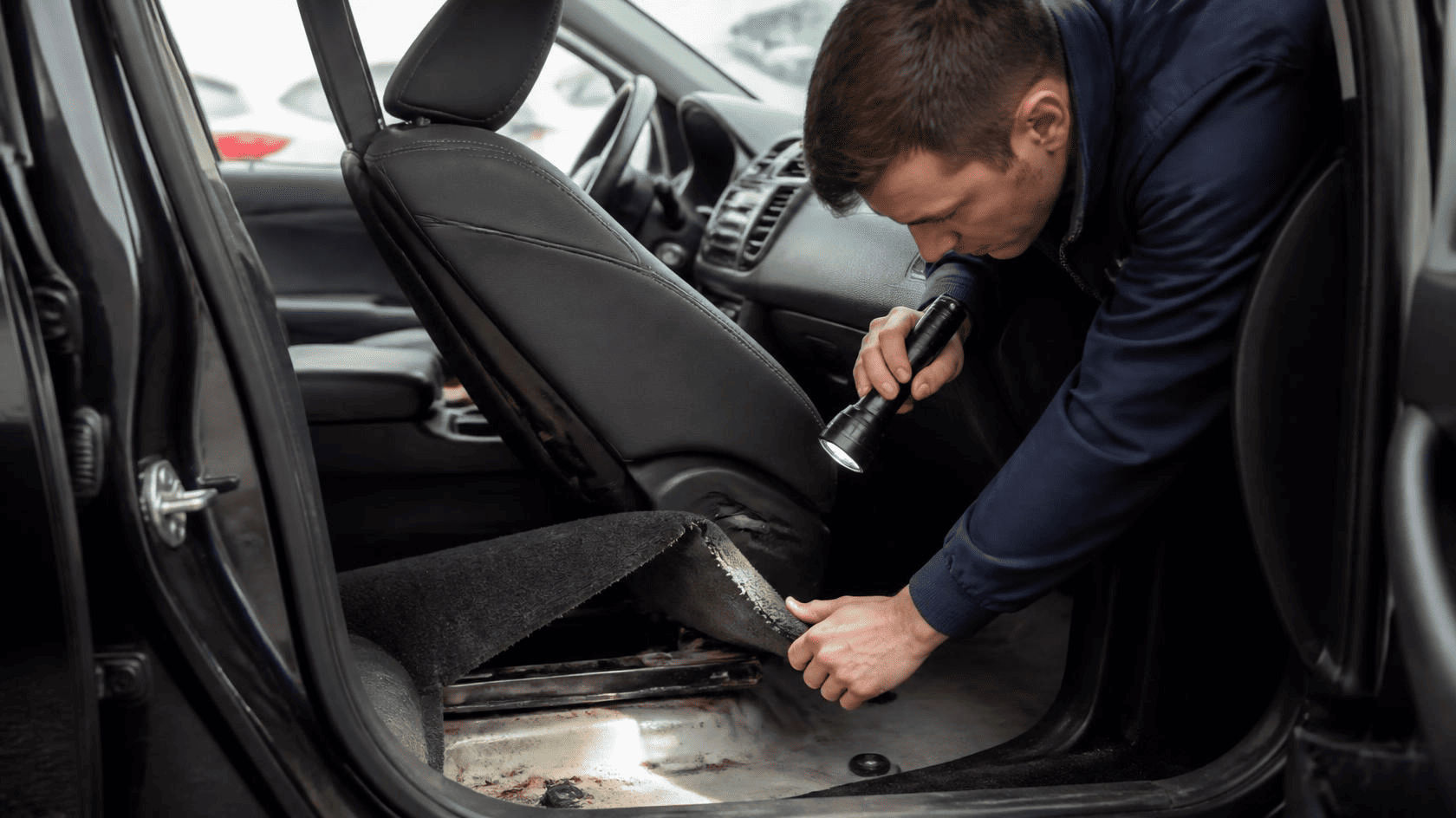 How to Spot a Flood-Damaged Used Car Before You Buy
Sep 16, 2026
How to Spot a Flood-Damaged Used Car Before You Buy
Sep 16, 2026
 2017 Ford GT for Sale in Tirana for EUR 80000 – A Rare Opportunity to Own an Automotive Icon
Jul 10, 2026
2017 Ford GT for Sale in Tirana for EUR 80000 – A Rare Opportunity to Own an Automotive Icon
Jul 10, 2026


 Google
 Facebook